

Weeks following Ottawa’s announcement of permitting a limited number of Chinese-manufactured vehicles in the Canadian market, concerns have been raised about potential data privacy risks. However, this issue may not deter consumers in the market for a new car.
At the Canadian International AutoShow, Dianne Dougall and Pat Shephard, who were exploring electric vehicles (EVs) to replace their Tesla, expressed interest in Chinese-made EVs. They indicated that privacy concerns were not a significant factor compared to any other connected vehicle.
Debbie Perriccioli from Waterdown, Ont., also attending the auto show, expressed willingness to consider Chinese-made vehicles despite acknowledging that privacy concerns were becoming increasingly irrelevant in today’s digital age.
Survey data from Leger conducted between Jan. 30 and Feb. 2 revealed that 61% of Canadians supported the introduction of Chinese EVs in the Canadian market. Respondents expressed higher concerns about vehicle quality and effects on the Canadian auto industry compared to privacy and security issues.
Experts interviewed by CBC News emphasized that data security is a vital issue for modern vehicles, irrespective of their country of origin. They highlighted that Canada’s privacy laws might not be robust enough to safeguard consumers from potential data access by the manufacturing country, including China.
David Masson, Vice President and Field Chief Information Security Officer at Darktrace, described all vehicles as essentially being “computers on wheels,” emphasizing that the source of the vehicle, be it electric or traditional, is not the primary concern.
China’s implementation of national security and intelligence laws in recent years has raised concerns about data sharing requirements with the government. Similar legislation in the U.S., such as the Cloud Act, mandates technology companies to share data collected abroad with the government upon request.
Critics like Pierre Poilievre and Doug Ford have expressed reservations about the deal with China, with concerns ranging from privacy issues to national security implications. Industry leaders, including Brian Kingston from the Canadian Vehicle Manufacturers’ Association, warned about potential trade challenges and security risks associated with Chinese vehicles.
The Canadian government has affirmed that Chinese vehicles entering the market must meet Canadian security standards. Public Safety Minister Gary Anandasangaree assured that safeguards would be in place to prevent data transmission to China.
Beth-Anne Schuelke-Leech, an associate professor at the University of Windsor, highlighted the importance of robust policies to regulate data collection and access in connected vehicles, emphasizing the lack of a comprehensive security system in place.
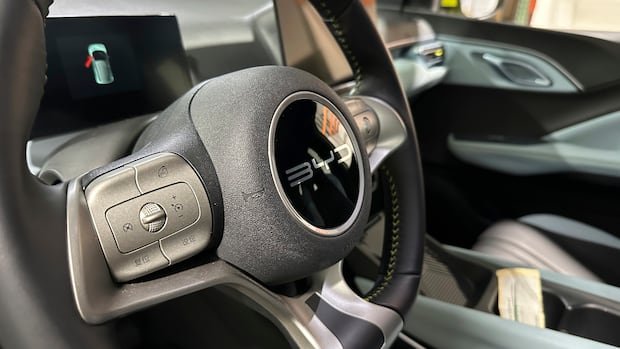
BYD is currently the primary Chinese automaker registered to import passenger cars into Canada, as per Transport Canada’s database. Concerns over data security have been previously raised in relation to Chinese companies like ByteDance’s TikTok and Huawei, leading to regulatory actions by the Canadian government.
National security analyst Stephanie Carvin suggested that the entry of Chinese-made vehicles into Canada should be viewed in the context of economic national security, considering potential market impacts and state support for Chinese manufacturers.