
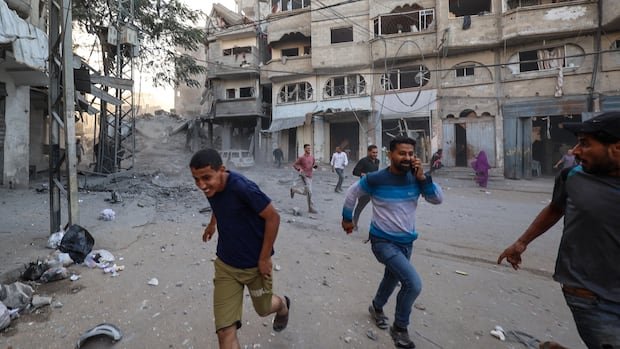

The Israeli military announced on Sunday that a ceasefire in Gaza had been reinstated after an incident resulting in the deaths of two soldiers and a series of airstrikes that claimed the lives of 26 individuals, marking a significant challenge to the U.S.-brokered truce for this month.
Following U.S. pressure, aid deliveries to the enclave were scheduled to resume on Monday, as confirmed by an Israeli security source, shortly after Israel suspended supplies in response to what it deemed a clear violation by Hamas of the ceasefire agreement.
Local residents and health authorities reported that the Israeli strikes in Gaza resulted in the deaths of at least 26 people, including a woman and a child. U.S. President Donald Trump’s envoy Steve Witkoff and son-in-law Jared Kushner were anticipated to travel to Israel on Monday, according to statements from an Israeli official and a U.S. official.
The Israeli military conducted strikes on Hamas targets throughout the enclave, targeting field commanders, gunmen, a tunnel, and weapons depots in response to militants launching an anti-tank missile and attacking its troops in Rafah, leading to the soldiers’ deaths.
A former school serving as a shelter for displaced individuals in the Nuseirat area was reportedly hit during one of the strikes, as recounted by residents. Hamas’ armed wing affirmed its commitment to the ceasefire agreement, claimed unawareness of clashes in Rafah, and stated no contact had been made with groups there since March.
Israeli Prime Minister Benjamin Netanyahu instructed the military to respond vigorously to what he perceived as Hamas’ violations of the ceasefire. Initially, the transfer of aid into Gaza was halted due to what was described as Hamas’ blatant breach of the ceasefire agreement by an Israeli security official. However, another Israeli security official later confirmed that aid distribution would recommence on Monday following U.S. intervention.
Amid fears of the truce collapsing, some Palestinians rushed to purchase goods from a primary market in Nuseirat, while families in Khan Younis moved away from their homes after nearby airstrikes. The recent strikes echoed Israel’s response to perceived serious violations of the ceasefire with Hamas’ Lebanese ally Hezbollah in late 2024, shortly after its initiation, though that ceasefire has largely held since then.
Despite the ceasefire taking effect on October 10, ending two years of conflict, both the Israeli government and Hamas have accused each other of transgressions against the ceasefire in recent days. Defense Minister Israel Katz emphasized the marking of a physical “yellow line” to demarcate the area where Israeli forces withdrew according to the ceasefire terms, warning of consequences for any ceasefire breaches or attempts to cross the line.
Hamas outlined a series of alleged violations by Israel resulting in 46 deaths and impeding essential supplies from reaching the enclave, while Israel maintained that Hamas delayed the handover of deceased hostages’ bodies. The Rafah border crossing between Gaza and Egypt, initially set to reopen, remained closed pending Hamas’ compliance with ceasefire obligations.
Hamas released its living hostages and returned the bodies of some captives, attributing delays in returning all bodies to the need for specialized equipment to recover corpses buried under rubble. The Rafah crossing, closed since May 2024, is a crucial channel for humanitarian aid to reach Gaza during ceasefires.
Notable unresolved issues hindering lasting peace in Gaza include Hamas disarmament, future governance of Gaza, establishment of an international “stabilization force,” and progress towards a Palestinian state.