
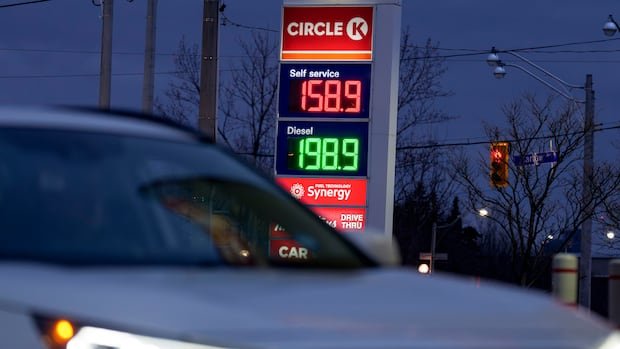

Amid the ongoing conflict between the U.S. and Israel with Iran, oil prices are skyrocketing back to $100 per barrel, causing global stocks to plummet on Thursday. The S&P 500 saw a 1.5% decline, while the Dow Jones Industrial Average dropped 739 points (1.5%) and the Nasdaq composite fell by 1.7%.
The focal point of concern is the oil market, with the price of Brent crude reaching as high as $101.59 per barrel. There are growing fears that the war could disrupt oil production and transportation in the Persian Gulf, potentially leading to a significant inflation surge in the global economy.
Iran has intensified its attacks on oil facilities in Gulf Arab countries to exert pressure on the U.S. and Israel. This has resulted in a halt in cargo traffic through the vital Strait of Hormuz, a critical pathway for a substantial portion of global oil shipments.
To counter the war’s impact on energy markets, the International Energy Agency (IEA) announced the release of 400 million barrels of emergency oil reserves, the largest volume in its history. Additionally, the U.S. is planning to release 172 million barrels from its Strategic Petroleum Reserve in the upcoming week.
Despite efforts to stabilize prices, the ongoing turmoil is fueling speculation that oil prices could surge even higher, leading to a downward trend in global markets. Oxford Economics has warned that the lack of a de-escalation timeline for the conflict and the closure of the Strait of Hormuz could result in further price volatility, potentially pushing oil prices up to $140 per barrel.
Since the conflict began on Feb. 28, sharp fluctuations in oil prices have triggered rapid shifts in financial markets worldwide. The situation remains uncertain, with concerns that the conflict may persist, prolonging the market instability.
In response to the heightened uncertainty, the G7 energy ministers recently convened in Paris to explore strategies to lower prices. However, the absence of a clear resolution timeline continues to contribute to market uncertainty and volatility.
Oil prices surged to their highest levels since 2022 this week due to concerns about prolonged disruption in Middle Eastern production, raising fears of significant inflation in the global economy. Market performance in Europe and Asia has been mixed, with various stock indices experiencing losses amid the ongoing instability.
Currency trading also reflects the market unease, with the U.S. dollar and euro showing minor fluctuations against the Japanese yen. The situation remains fluid as global markets navigate the evolving conflict dynamics.