
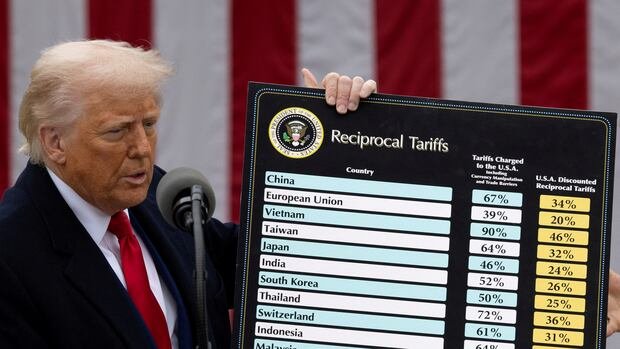

The Trump administration initiated a trade investigation on Wednesday to address excess industrial capacity in 16 key trading partners. This move comes after the U.S. Supreme Court invalidated a central aspect of Trump’s trade policy last month. Notably, Canada is not among the countries targeted in this new probe.
U.S. Trade Representative Jamieson Greer mentioned that the Section 301 investigation into unfair trade practices could result in the imposition of new tariffs on countries like China, the European Union, India, Japan, Mexico, and South Korea by this summer. Other countries included in the excess capacity probe are Taiwan, Vietnam, Thailand, Malaysia, Cambodia, Singapore, Indonesia, Bangladesh, Switzerland, and Norway.
Following the February ruling by the Supreme Court, which deemed the president’s emergency powers law for tariffs invalid, Trump’s administration aims to recover lost revenues through alternative legal avenues to enforce new levies. The ongoing investigations under Section 301 of the Trade Act of 1974 could lead to the implementation of new import taxes.
During a press call on Wednesday, Greer emphasized that the administration’s policy remains consistent, with potential adjustments based on legal circumstances. The primary objective is to safeguard American jobs.
The initiation of these investigations to replace previous tariffs could reignite the trade tensions that disrupted the global economy in the past year. The impact of new import taxes on existing trade agreements remains uncertain, as the overturned tariffs necessitated new arrangements with U.S. trading partners.
Greer underscored that trading partners should adhere to existing agreements amidst the ongoing probes, although he refrained from guaranteeing immunity against potential Section 301 tariffs. Trump’s commitment to implementing tariffs as a response to unfair trade practices and reducing the trade deficit was highlighted by Greer.
The government’s investigations focus on persistent trade surpluses, subsidies, wage suppression, and other trade-related issues. Additionally, a Section 301 investigation targeting goods produced through forced labor is being rolled out. Greer hinted at possible future investigations concerning digital service taxes, pharmaceutical drug pricing, and ocean pollution. Separate trade inquiries under Section 232 of the 1962 Trade Expansion Act are being conducted by the U.S. Commerce Department.
There are time constraints to finalize the investigations, with the expiration of 10% tariffs on foreign-made goods under Section 122 of the 1974 Trade Act on July 24. Trump has expressed intentions to raise the import tax to 15%, but no action has been taken yet.
European and Asian countries have expressed concerns about potential deviations from existing trade agreements with the U.S. Bernd Lange from the European Parliament’s trade committee emphasized the importance of upholding previous deals. China rejected the U.S. claim of overcapacity as politically motivated, opposing unilateral tariff measures. Taiwan and Indonesia highlighted the significance of their trade agreements with the U.S. in guiding bilateral trade relations.