
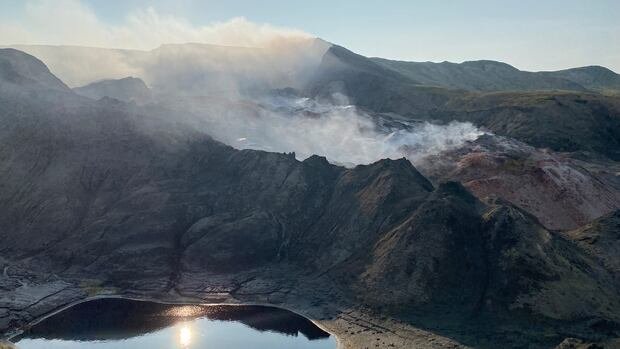

Calgary scientists have identified what they believe to be some of the most acidic natural water on earth in the Northwest Territories. The thawing of permafrost and land erosion processes in the Smoking Hills Formation, influenced by climate change, have caused the release of toxic metals and highly acidic solutions into rivers, bays, and potentially the Arctic Ocean.
Research scientist Stephen Grasby from the Geological Survey of Canada visited the site on the north shore of the territory in 2017 and 2023. He was amazed by the scale of the toxicity and acidity in the ponds around the Smoking Hills. Grasby remarked on the remarkable power of nature, stating that the natural acidic waters produced in the area surpass anything humans could create at an industrial site.
The formation of toxic waters is attributed to metals trapped in pyrite, also known as “fool’s gold,” buried underground 85 million years ago during active volcanism in Arctic Canada. The exposure of pyrite to oxygen due to slumping has led to the release of extreme heat and large quantities of metals into the surrounding bodies of water near the Smoking Hills.
During Grasby’s visits, significant transformations were observed, with ponds turning black and resembling oil due to high acidity levels. The research team encountered difficulties in measuring the pH levels accurately as they were beyond the range of their equipment. Additionally, evidence of melted rocks indicated temperatures exceeding 1,200°C just below the surface layer.
The ongoing thawing of permafrost, accelerated by climate change, exacerbates the situation further. Elliott Skierszkan from Carleton University emphasized the need for increased research to better understand the impact of permafrost thaw on water quality and aquatic ecosystems in the North.
Concerns are raised about the potential environmental effects of the toxic metals leaking into other water bodies, with reports of rivers turning orange in Alaska and northern Canada. These metals, including cadmium, were found at levels significantly higher than safe drinking guidelines. Grasby and Skierszkan advocate for more research to comprehend the implications of climate change on the Smoking Hills and the Arctic environment.