

Most U.S. stocks experienced declines on Wednesday as oil prices began to rise again, although the markets displayed relative stability for a second consecutive day, following a tumultuous start to the week due to ongoing conflicts in the Middle East.
The S&P 500 closed the trading session with a 0.1% decrease, while the Dow Jones Industrial Average slipped by 0.6% and the Nasdaq composite saw a 0.1% increase. Despite this, Oracle provided some support to Wall Street after posting strong profits.
Since the conflict began on February 28, oil prices have been the primary driver of significant fluctuations in global financial markets, fluctuating dramatically at times.
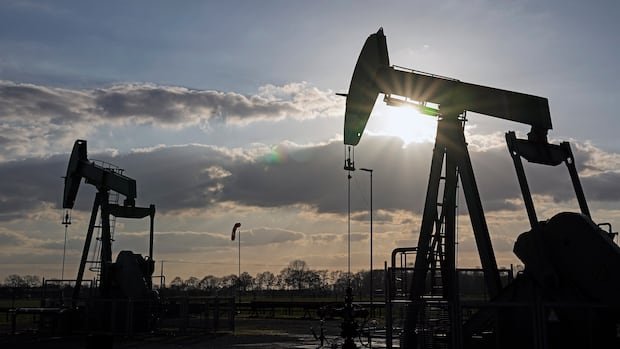
Oil prices surged to their highest levels since 2022 earlier this week amid concerns that Middle East production disruptions could lead to sustained inflation, prompting fears for the global economy.
Despite the International Energy Agency’s announcement that its members would release a record 400 million barrels of emergency oil reserves, oil prices edged higher on Wednesday.
Analysts anticipate that only a full restoration of oil and natural gas flow from the Persian Gulf region will fully stabilize the market, with global investors eagerly awaiting the conflict’s resolution.
“I think it will have a calming effect and it will push prices down simply because, you know, sentiment will be eased, and essentially we will have more oil available on the market,” noted Naveen Das, an energy analyst at Kpler in London. “However, it won’t be an effective Band-Aid, really, to replace the volumes that we’ve lost so far.”
The price of Brent crude, the international benchmark, increased by 4.8% to $91.98 US per barrel, while benchmark U.S. crude rose by 4.6% to $87.25 US per barrel.
Concerns are centered on the Strait of Hormuz, a critical waterway through which a significant portion of global oil shipments pass daily. The war has disrupted oil traffic in the region, leading to storage tanks filling up and production cuts by oil producers.
Germany, Austria, and Japan announced plans to release portions of their oil reserves in response to the IEA’s request, with Germany’s minister for economic affairs and energy, Katherina Reiche, stating that it would take a few days for the first quantities to be delivered.
The U.S. destroyed several Iranian mine-laying vessels on Tuesday as Iran threatened to block oil exports through the Strait of Hormuz. Analysts are closely watching how major economies, particularly the U.S., will ensure oil flow through the strait and alternative routes to stabilize prices amid the ongoing conflict.
While emergency oil reserve releases may provide temporary relief, the disruption to supply flows remains a significant concern, potentially leading to further oil price increases if the conflict persists.
Stock markets typically rebound swiftly from military conflicts, but sustained high oil prices could strain household budgets and business operations, potentially leading to a worst-case scenario of “stagflation,” characterized by stagnant growth and high inflation.
An inflation report released Wednesday showed a 2.4% increase in consumer prices compared to a year earlier, higher than the U.S. Federal Reserve’s two percent target and exacerbated by recent spikes in gasoline prices due to the conflict.
The surge in oil prices has prompted traders to revise their expectations for the timing of potential interest rate cuts by the Federal Reserve, with implications for the economy and inflation concerns.