
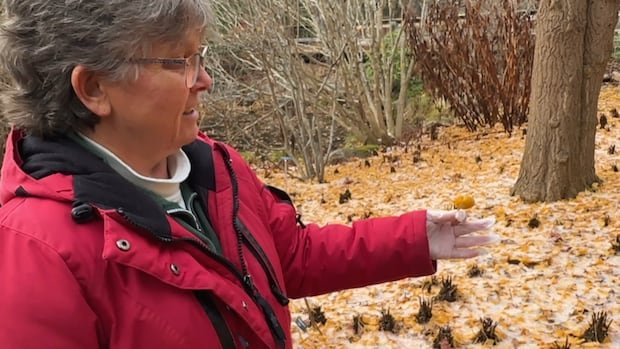

For four decades, the staff at Annapolis Royal Historic Gardens in Nova Scotia believed their ginkgo tree was male. However, earlier this year, they were surprised to discover that it was actually female. Female ginkgo trees are not commonly sold commercially due to the foul odor emitted by their fruit-like seeds when they drop and are crushed underfoot.
Trish Fry, the garden’s manager, described the smell as unpleasant, likening it to dog feces, rancid butter, or even vomit. The female ginkgo tree at the gardens began producing seeds this year, catching the staff off guard. Initially, they dismissed the idea that the seeds came from the ginkgo tree since they believed it to be male.
Upon closer inspection by the horticulturalist and staff, it was confirmed that the tree was indeed female. Ginkgo trees, known for their vibrant leaves that turn from green to bright yellow in autumn, can take decades to reach full maturity.
Ashlea Viola, the gardens’ horticulturist, expressed surprise at the discovery, noting that planting female ginkgo trees by mistake is not uncommon. Despite the unusual odor produced by the tree’s seeds, ginkgos are valued for their beauty and resilience, being the only surviving species of their kind.
Viola highlighted that ginkgo trees are often referred to as “living fossils” as they have outlasted dinosaurs. Despite the inconvenience of the smelly seeds, the historic gardens have no plans to remove the female ginkgo tree, as its unique features and historical significance make it a valuable addition to the garden. Visitors are advised to expect the distinct smell when visiting the gardens after the seeds have fallen.
In conclusion, the ginkgo tree’s unique characteristics and historical importance outweigh the inconvenience of its smelly seeds, making it a cherished feature at the Annapolis Royal Historic Gardens.