
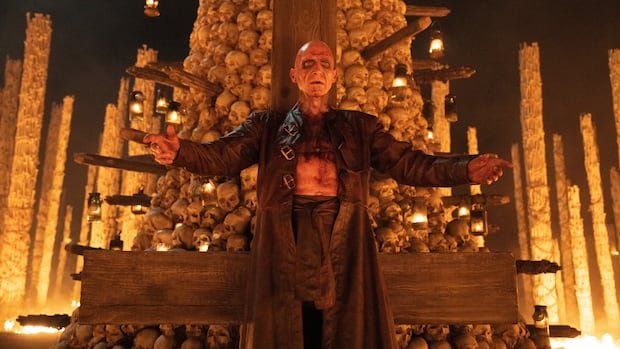

In the annals of history, echoes reminiscent of Nia DaCosta’s film “28 Years Later: The Bone Temple” reverberate. These echoes harken back to instances such as the early European settlers in Australia who, stranded on the continent, swiftly transformed into a savage group of tormentors under the leadership of a manipulative figure. This leader maintained control by promising his followers the spoils of their victims and the thrill of elaborate, ritualistic violence.
Similarly, in 1941, during a harsh winter, two individuals orchestrated the deaths of nine community members on Belcher Island in Hudson Bay, declaring themselves as saviors through ritualistic violence. DaCosta’s sequel to the zombie-apocalypse film, a sequel to “28 Years Later” directed by Danny Boyle, delves into how seemingly benevolent communal structures can be perverted for malevolent purposes.
“The Bone Temple” presents a disturbing narrative of bloodshed, sadism, and misguided religious zeal, likely testing the limits for many viewers. However, for those who can endure it, the film delivers not only gripping action and stellar performances but also a profound commentary on the origins of structured cruelty, its allure to leaders, and strategies to combat it.
Understanding DaCosta’s latest work requires familiarity with the conclusion of the preceding film, which is a minor spoiler for those yet to watch it. In a world still plagued by the “rage virus,” survivors have isolated themselves in fenced-off communities, with characters like Spike and the enigmatic Sir Jimmy Crystal taking center stage in this dark drama.
The narrative shifts focus to Sir Jimmy Crystal and his band of followers, each adopting the persona of “Jimmy” and engaging in brutal acts to worship their leader’s distorted version of charity. As the plot unfolds, the film challenges conventional hero tropes and delves into the moral complexities of its characters, including Dr. Kelson and Samson, offering a fresh perspective on the zombie genre.
The film delves into themes of manipulation, faith, and violence, drawing parallels to historical tragedies where ideologies have been twisted to justify brutality. Despite its grim tone, “The Bone Temple” ultimately offers a message of resistance against oppressive systems and a reminder not to sacrifice one’s humanity in the pursuit of temporary security.
In a cinematic landscape filled with screaming undead, this film manages to deliver a timely and thought-provoking narrative that resonates with contemporary audiences.