
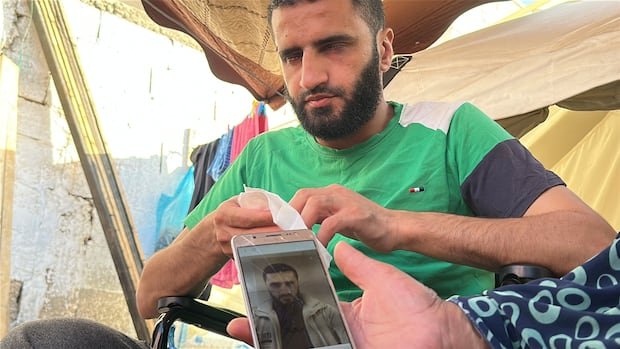

Mahmoud Abu Foul has returned to Gaza after spending over nine months in Israeli custody. Upon his homecoming, amidst a large gathering welcoming the released detainees, he couldn’t locate his family due to losing his eyesight during his imprisonment. The 28-year-old Palestinian, who had already lost his left leg in a 2015 Israeli airstrike, recounted enduring physical abuse and torture at an infamous Israeli military prison, resulting in his blindness.
“I walked out of prison, hoping and wishing to regain at least partial sight,” Abu Foul shared with a CBC News freelance videographer from a tent in Nuseirat refugee camp, where he now resides with his mother. He was apprehended by the Israel Defence Forces at Kamal Adwan Hospital in northern Gaza on Dec. 27, 2024, where he was receiving treatment for his amputated leg sustained a decade earlier in an Israeli airstrike on Jabalia.
Under the current ceasefire agreement with Hamas, Abu Foul was among the 1,700 Palestinian detainees released by Israel on Oct. 13. However, the joy of returning to his country was overshadowed by his inability to see. His mother, Umm Ahed Abu Foul, expressed her shock and sorrow upon discovering her son’s blindness after his release.
Abu Foul detailed being accused of terrorism and subjected to physical assaults by guards during his detention at Sde Teiman in southern Israel. He highlighted the severe beatings, forced humiliations, and lack of medical attention that led to his vision loss. Despite his previous challenges, he emphasized that losing his eyesight was the most challenging ordeal he faced.
The report documented by B’Tselem last year exposed a systematic pattern of abuse and torture of Palestinian prisoners by Israel. Abu Foul’s account aligns with the testimonies revealing a culture of abuse and degradation within Israeli detention facilities. Addameer, a Palestinian prisoner rights group, raised concerns about the current detainment of over 2,600 Palestinians from Gaza under Israel’s Unlawful Combatants Law.
Abu Foul’s aspirations now revolve around seeking medical intervention abroad to potentially restore his vision, emphasizing the need for international attention and support in addressing the reported human rights violations within Israeli prisons.