


On Thursday, there was a significant decline in stocks, while oil prices increased, as Wall Street shifted from optimism to skepticism regarding a potential resolution to the U.S.-Israeli conflict with Iran.
The S&P 500 plummeted by 1.7 percent, marking its steepest loss since January and is now on course for a fifth consecutive week of losses. This trend has been ongoing since before the conflict erupted on February 28, and if this continues, it will represent the longest losing streak in nearly four years.
The Dow Jones Industrial Average fell by 469 points, equivalent to a one percent drop, while the Nasdaq composite dropped 2.4 percent, falling over 10 percent below its record high achieved earlier this year. This substantial decline has led investors to label it as a “correction.”
Stock exchanges across much of Asia and Europe also experienced declines. These fluctuations in the financial markets come after a week that began with high hopes when U.S. President Donald Trump reported that constructive negotiations were occurring to end the war. However, Iran refuted claims of direct discussions and rejected a U.S. ceasefire proposal that was conveyed through Pakistan.
On Thursday, hostilities continued, and thousands of U.S. troops approached the region. Concurrently, Iran tightened its control over the vital Strait of Hormuz.
Iran may be establishing a sort of “toll booth” for tankers navigating the narrow passageway, which typically sees one-fifth of the world’s oil flow from the Persian Gulf to global consumers.
Brent crude oil prices surged by 4.8 percent to close at $101.89 USD, reflecting a decline in optimism for a return to normalcy in the strait. This figure has increased from approximately $70 prior to the conflict. Benchmark U.S. crude also rose by 4.6 percent to $94.48 per barrel.
Trump moderates threats
“They better get serious soon, before it is too late,” Trump stated on his social media platform Thursday morning, referring to Iranian negotiators. “Because once that happens, there is NO TURNING BACK, and it won’t be pretty!”
Shortly after Wall Street concluded its trading for the day, Trump softened his rhetoric slightly, announcing he would postpone his threat to “obliterate” Iranian power facilities until April 6, providing additional time for negotiations.
“Discussions are ongoing and, despite misleading statements from the Fake News Media and others, they are progressing quite well.”
-
Stock markets dip for another straight week as U.S. war on Iran continues
-
Oil prices fall after Trump postpones Iran strikes
Following this, oil prices receded from their peaks, with Brent crude approaching $100 per barrel again. Treasury yields also moderated from their significant increases in the bond market.
High Treasury yields and instability in the bond market were major reasons Trump cited a year prior when he backed off his initial threats regarding global tariffs made on “Liberation Day.” Critics suggested that Trump tends to back down, or “TACO,” when financial markets display sufficient distress.
The yield on the 10-year Treasury rose to 4.43 percent on Thursday, up from 4.33 percent late Wednesday and from just 3.97 percent before the conflict began. This represents a substantial increase for the bond market, which has already pushed rates higher for mortgages and other types of loans for U.S. households and businesses, thereby slowing economic growth.
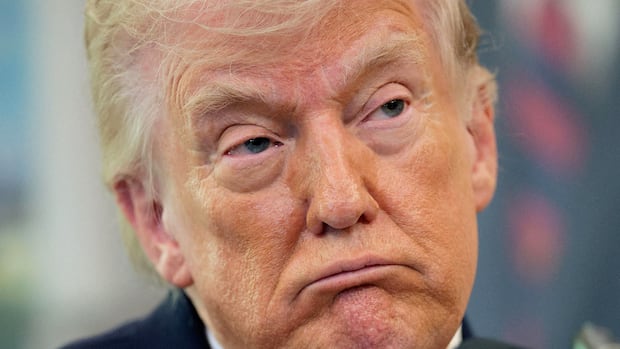
Iran flatly rejected U.S. President Donald Trump’s 15-point ceasefire plan, and his demands that Iran admit military defeat. Meanwhile, the Pentagon ordered at least 1,000 airborne soldiers to the region, alongside thousands of Marines already en route.
A report released on Thursday morning indicated a slight increase in the number of U.S. workers filing for unemployment benefits last week, although the total remains low compared to historical averages.
Typically, a cooling job market would prompt the U.S. Federal Reserve to lower interest rates to stimulate economic growth. However, Wall Street’s hopes for a potential interest rate cut this year have plummeted, even though traders had initially anticipated several reductions. The reason for this shift is that lower interest rates could exacerbate inflation concerns, and the surge in oil prices has amplified those anxieties.
Decline in tech stocks
On Wall Street, technology stocks were the heaviest contributors to the market downturn.
Meta Platforms experienced an eight percent decline, while Alphabet fell by 3.4 percent after both companies had remained relatively stable the previous day, when a jury in Los Angeles found Meta and YouTube liable in a landmark case regarding social media addiction.
Although the financial penalties were minor compared to the companies’ substantial profits, this could signal a pivotal moment that invites further legal actions. Other major tech companies also saw declines, including a 4.2 percent drop for Nvidia and a two percent decrease for Amazon. In contrast, Apple was an exception, marginally increasing by 0.1 percent.
Commercial Metals saw a 4.7 percent drop after the manufacturer of steel rebar and other products reported a lower-than-expected profit for the most recent quarter. CEO Peter Matt noted that adverse weather conditions impacted its North American operations during that time, although overall market conditions appeared positive.
In summary, the S&P 500 decreased by 114.74 points to 6,477.16, which is 7.2 percent below its all-time high reached just a couple of months ago. The Dow Jones Industrial Average fell by 469.38 to 45,960.11, and the Nasdaq composite declined by 521.74 to 21,408.08.
Internationally, Germany’s DAX dropped by 1.5 percent, Hong Kong’s Hang Seng fell by 1.9 percent, and South Korea’s Kospi decreased by 3.2 percent. Japan’s Nikkei 225 recorded one of the smallest losses globally, down by 0.3 percent.