

Prominent leaders in the northern region are promoting the Arctic economic and security corridor as a crucial project for the development of the two territories it spans. While some express optimism about the potential economic advantages, opinions are divided on the overall impact.
In light of the decline in mining activities in the Northwest Territories, Tłı̨chǫ grand chief Jackson Lafferty views the project, which traverses Tłı̨chǫ land, as an opportunity for the community. Teaming up with the Yellowknives Dene First Nation, the Tłı̨chǫ government recently entered a memorandum of understanding to jointly oversee the project from the N.W.T. side.
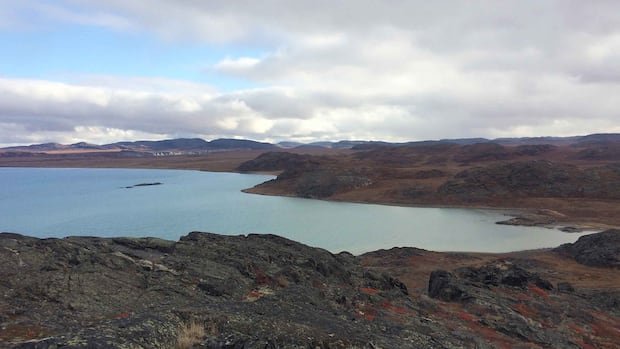
The proposed corridor has been identified as a candidate for expedited development by the federal government. It envisions establishing a deep-water port at Grays Bay in Nunavut to support navy vessels and large cargo ships for transporting materials from potential critical mineral mines in both the Northwest Territories and Nunavut. A 230-kilometre all-weather road would link the port to Jericho Station in Nunavut, passing through a defunct diamond mine, and further connecting to Yellowknife via a winter road.
Lafferty has initiated discussions with key stakeholders in Ottawa and abroad, emphasizing the project’s potential to enhance connectivity for remote communities like Gamètı̀ and Wekweètì in N.W.T. On the Nunavut side, the nearest community to Grays Bay is Kugluktuk, situated approximately 200 kilometers away from the proposed port. The West Kitikmeot Resources Corp., leading the project in Nunavut, highlights the port’s strategic location with access to tidewater, enabling the handling of large ships and potential benefits for communities in the Kitikmeot region.
CEO Brendan Bell envisions the port facilitating the arrival of large vessels that can be segmented into smaller barges for distribution to communities like Kugluktuk and Cambridge Bay. He anticipates improved access for essential supplies and materials to these regions, emphasizing the project’s potential benefits.
However, Amanda Dumond, manager of the Kugluktuk Hunters and Trappers Organization, expresses reservations about the project’s benefits, particularly concerning potential short-term job opportunities and disruption to local communities. She emphasizes the importance of long-term employment prospects and sustainable development for the region.
Nunavut NDP MP Lori Idlout questions the project’s focus on bolstering Arctic security over addressing key social issues within Nunavut, such as housing conditions and food security. She advocates for greater involvement of local residents in security measures to leverage their environmental knowledge for the region’s benefit.
Despite anticipated environmental impacts, Bell assures that mitigation measures will be integrated into the project’s design, with plans to submit an impact statement for review. Lafferty emphasizes the importance of environmental stewardship in balancing economic development with preserving the region’s natural resources.
The project’s estimated cost on the Nunavut side stands at $1 billion, with construction slated to commence in 2030. Funding strategies involve private investment and potential federal support, given the significant infrastructure demands in the territory. The complex nature of constructing the all-season road on permafrost and bedrock presents engineering challenges, but experts believe successful execution is feasible, drawing inspiration from past Arctic infrastructure projects.